

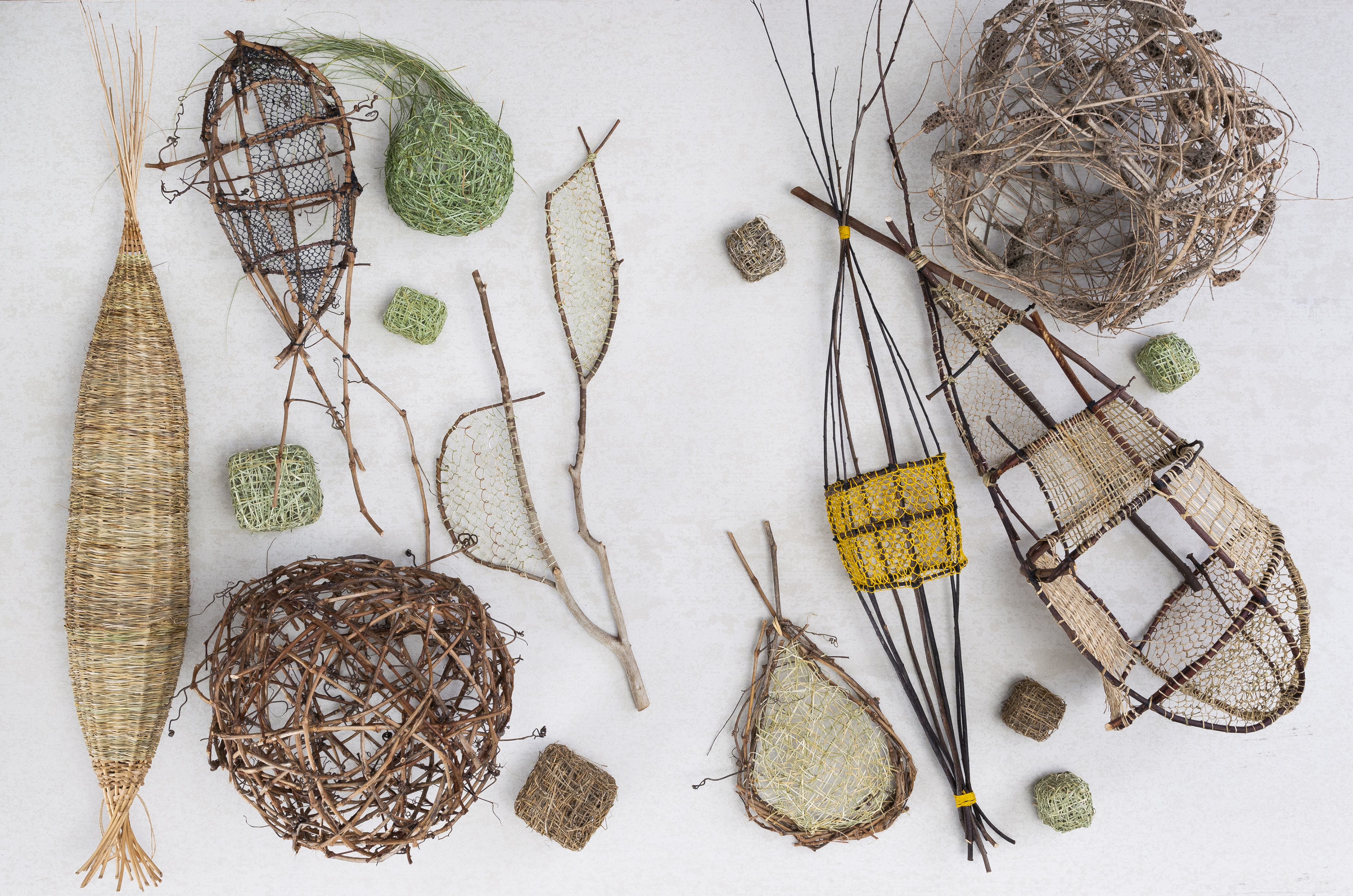
I come from a textile background, training as a clothing designer after I left school. I spent the next 20 years working across the industry, immersed in fabrics, textures and fibres – including in my own business manufacturing children’s clothes. Later, I enrolled in a visual arts diploma; at the time it felt indulgent returning to study driven by a desire to reconnect with creativity. But it proved to be pivotal. It shifted my perspective to a broader practice and laid the foundation for the creative business I would eventually build.
A turning point came when I had the opportunity to visit Arnhem Land. I met Mavis Ganambarr, a local Indigenous woman who introduced me to basket coiling. She was incredibly special.
When I returned to Victoria, I joined the Basketmakers of Victoria. Being part of that group exposed me to a wide range of techniques and, importantly, a wide range of plants used in basketry. I asked a million questions. What plant is this? When do you harvest it? How do you prepare it? How long do you soak it?
What I eventually realised was that you can gather all the advice in the world but you still need to experiment. True knowledge of fibre only develops when you harvest it, dry it, soak it, over-soak it, under-soak it, break it and try again. This experimentation is where the understanding begins.
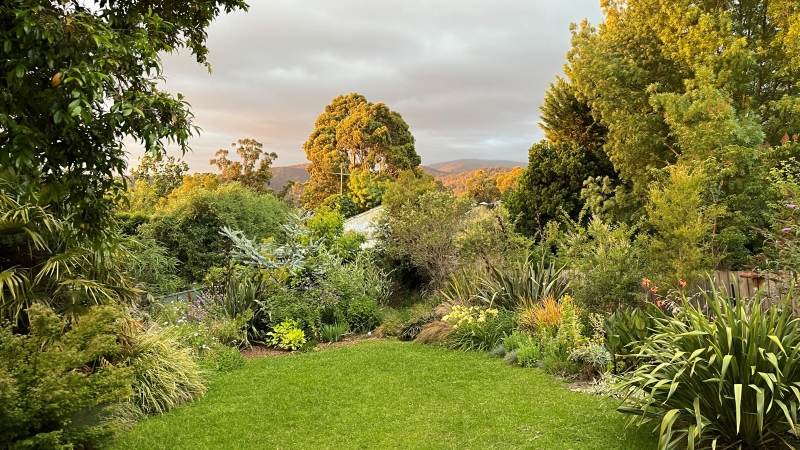
When I first started weaving, my garden was relatively simple. But as my interest in basketry deepened, so did my fascination with plants. I wanted my own plant fibre pantry but also wanted to understand the plants from growth to harvest to finished piece. Over about ten years, my garden evolved into a weaving garden. I now grow around 30 species that I use in my work and there’s still so much to explore!
Some of my favourites include: New Zealand flax (Phormium tenax), Day lilies (Hemerocallis), red hot poker (Kniphofia), dragon tree (Dracaena draco), grapevine (Vitis vinifera) and palm inflorescence. Bulb plants are also surprisingly useful, including daffodils, garlic and onion. Even onion grass (considered a nuisance) can be harvested, dried and twisted into string.
Dandelion stems, nettles, banana fibre (the trunk, which is incredibly fibrous and can be stripped to use thick or fine), ivy, honeysuckle, kiwi vine, clematis and even invasive vines such as kudzu or cat’s claw creeper in Queensland all provide excellent weaving materials. The range is extraordinary once you start looking!
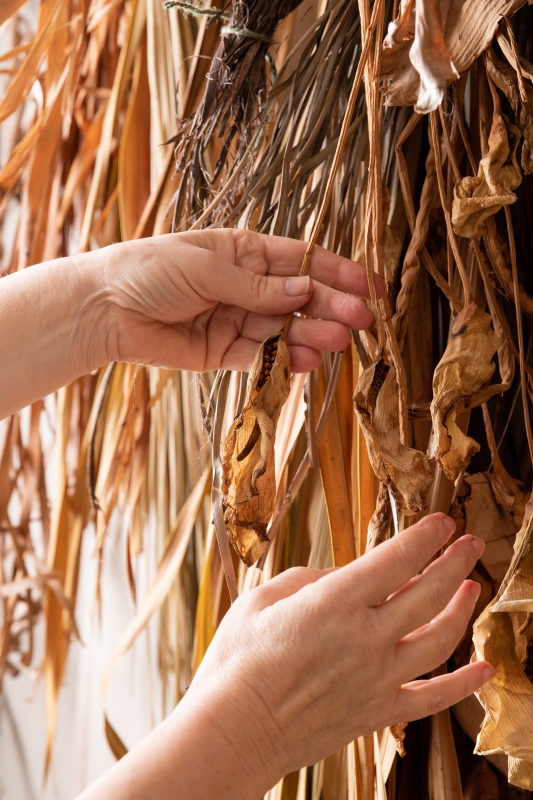
Harvesting is only the beginning. Drying and storing the fibre properly is crucial as fibre can easily go mouldy. Learning how long to soak fibres before weaving is equally important. These small, practical details are gleaned once you actually begin working with plant fibre. Learning through doing is what really matters.
In recent years I was working on what I call ‘practice projects’. These are small, quick, explorative and experimental pieces. They allow me to play freely and not dwell on perfection; this produces a very different outcome. When writing my book, I created many of these exploratory works to test ideas. I pinned them on the wall opposite my dining table. As I ate dinner, I would look at them and think about how I could try different techniques, plant fibre or shape. Visitors to the house would ask, “What are these?” “Oh, they’re just samples,” I’d say.
But something very interesting happened. When I arranged them together, these small pieces created a visually striking wall, full of texture, form and possibility. It became a conversation piece – a collection of experiments transformed into an artwork in its own right.
That discovery became part of my teaching and my book, informing the idea of a ‘practice project wall’. It encourages curiosity, removes judgement and allows ideas to evolve organically. What excites me most about this process is that anyone can begin. You can step outside, pick a few leaves or sticks and simply start playing.
Natural fibre-based art is renewable and biodegradable. If a piece eventually falls apart or you tire of it, it can return to the compost heap without guilt. You need very few tools and the material is free. For me, that is deeply nourishing – you can watch the plants grow, harvest them, transform them and continue learning forever.
It is a true sustainable craft, one that connects nature and gardens, hands and imagination in the most satisfying way. Why not try your hand today?
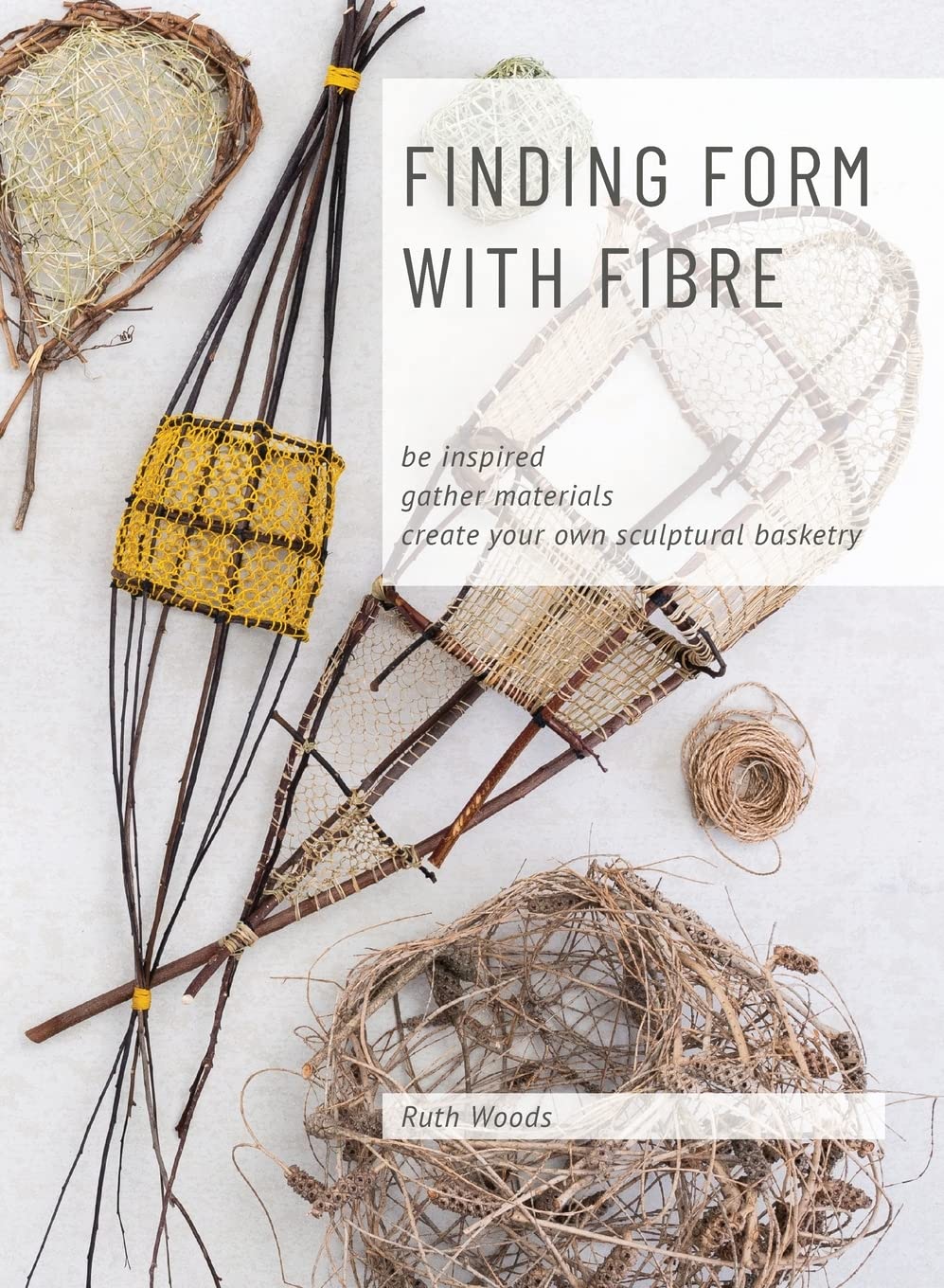
Finding Form with Fibre
Ruth's book on sustainable crafts is available on the Diggers Club website
Soft leafy plants
| Common name | Botanical name |
|---|---|
| Most bulb plants | |
| Daffodils | Narcissus sp. |
| Bugle Lily | Watsonia borbonica |
| Gladiolus | Gladiolus |
| African flag | Chasmanthe floribunda |
| Tulips | Tulipa sp. |
| Red Hot Poker | Kniphofia sp. |
| Mat-rush | Lomandra |
| Iris sp. | Iris sp. |
| Kangaroo paw | Anigozanthos sp. |
| Corn Maize | Zea mays |
| Philodendron Selloum (leaf sheath) | Philodendron bipinnatifidum ‘Selloum’ |
| Daylily | Hemerocallis sp. |
| NOT Agapanthus |
Leathery leafy plants
| Common name | Botanical name |
|---|---|
| NZ Flax | Phormium tenax |
| Dragon Tree | |
| Madagascar Dragon Tree | Dracaena marginata |
| Cabbage Tree | Cordyline australis |
| Yucca | Yucca filamentosa |
| Slender Palm lily | Cordyline stricta |
| Gymea Lily | Doryanthes excelsa |
| Foxtail Agave | Agave attenuata |
Stems
| Common name | Botanical name |
|---|---|
| Dandelion stems | Taraxacum officinale |
| Nettles | Urticaceae |
| Banana | Musa sp. |
| Arum Lily | Zantedeschia aethiopica |
Vines and creepers
| Common name | Botanical name |
|---|---|
| Common Ivy | Hedera helix |
| Virginia creeper | Parthenocissus quinquefolia |
| Grapevine | Vitis vinifera |
| Monkey vine | |
| Honeysuckle | Loniceera sp. |
| Star jasmine | Trachelospermum jasminoides |
| Kiwi vine | Actinidia arguta |
| Boston Ivy | Parthenocissus tricuspidata |
| Wonga Wonga vine | Pandorea pandorana |
| Clematis | Clematis |
| Kudzu | Pueraria montana |
| Wisteria | Wisteria sp. |
| Passion fruit | Passoflora edulis |
| Morning glory / Bindweed | Convolvulus |
| Cats claw | Dolichandra unguis-cati |
Woody fibre
| Common name | Botanical name |
|---|---|
| Jacaranda leaf stems | Jacaranda mimosifolia |
| Pine needles | Pinus |
| Eucalyptus branches | Eucalyptus sp. |
| Fruit tree prunings | |
| Maple tree prunings | Acer |
| Birch tree prunings | Betula |
| Willow tree branches | Salix sp. |
| Dogwood prunings | Cornus |
| Olive branches | Olea |
| Mulberry branches | Murus |
| Many tree pruning - experiment with what you find | |
Reeds and grasses
| Common name | Botanical name |
|---|---|
| Bulrush | Typha sp. |
| Tussock grass | Poa sp. |
| Mat-Rush | Lomandra |
| Knobby Rush | Ficinia nodosa |
| Tall spike rush | Eleocharis sp. |